Noema / Game in development
What will they remember?
A world simulation exploring how words become culture—and what survives across generations.
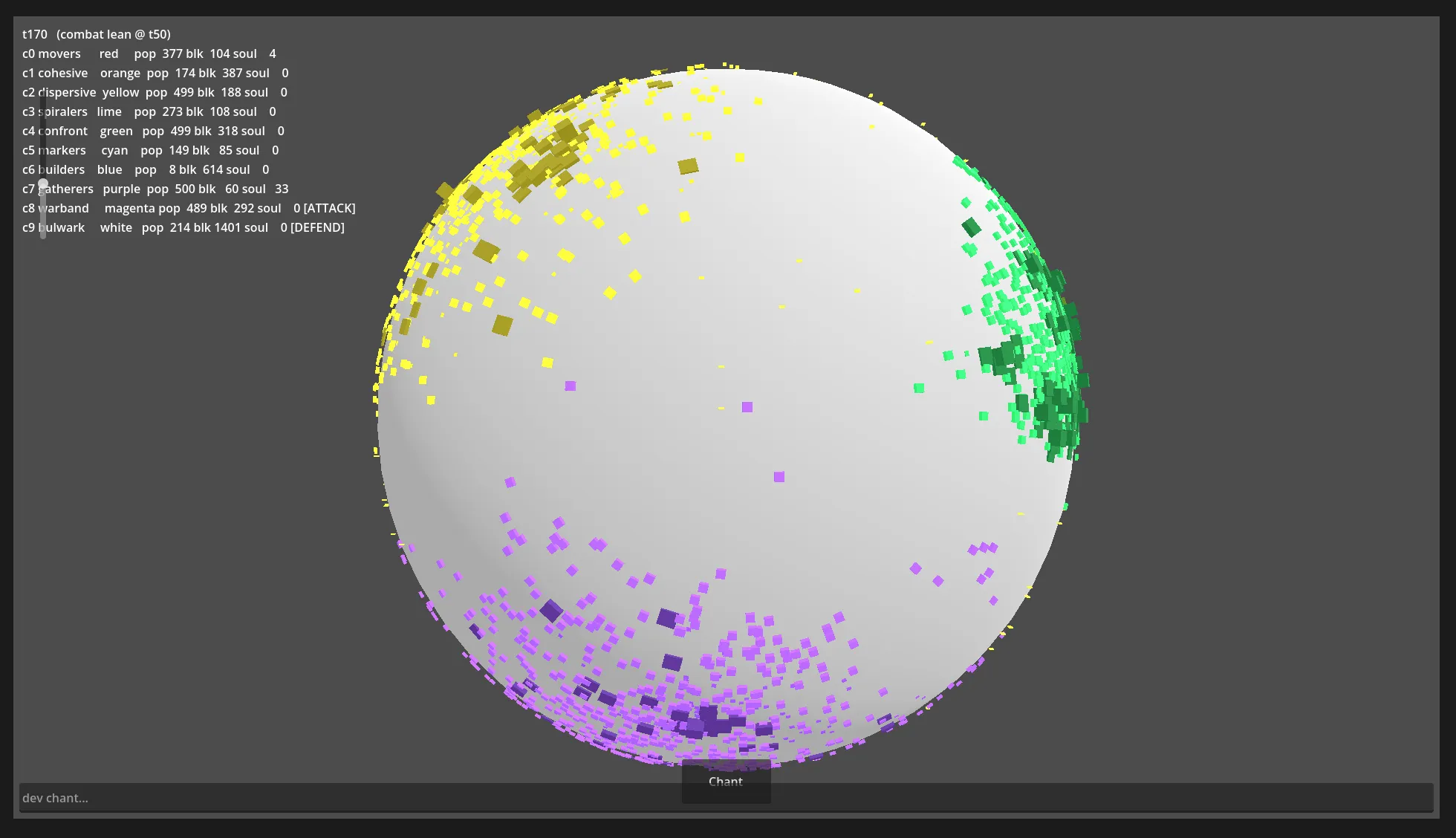
Words that leave a trace
In Noema, the player influences a colony of individual beings called dots through words and phrases known as chants. Repeated ideas accumulate into cultural memory, shaping the tendencies of the population over time.
The design follows that influence beyond a single lifetime. Memory passes between generations, weakens through inheritance, and blends through contact with neighboring colonies. What begins as a phrase can become a pattern of movement, a structure, or a mark on the world.
From a chant to a culture
- 01 / Chant
Introduce an idea
A word or phrase contributes to the colony’s cultural memory. Repetition gives an idea greater influence.
- 02 / Observe
Watch patterns emerge
Individual dots move and act according to their accumulated tendencies. Across a population, small actions form larger patterns.
- 03 / Inherit
See what persists
The design explores how culture changes as new generations inherit it and neighboring colonies come into contact.
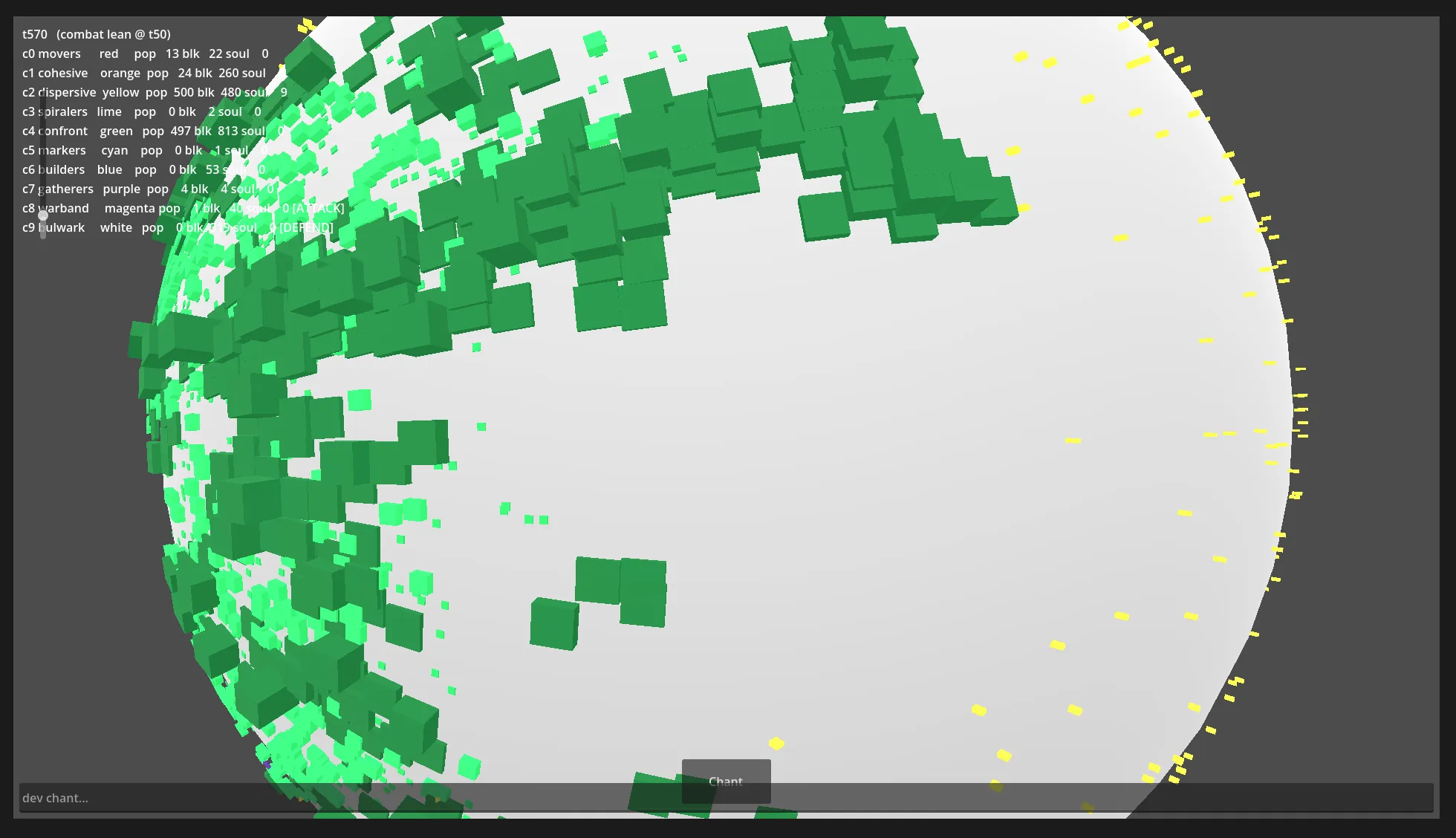
Culture made visible
Building and marking give the simulation a physical record. Looking across the sphere reveals where dots have gathered and acted; moving closer reveals the structures and surface marks those actions leave behind.
The larger question behind Noema is how long an influence can last. If the chanting stops, what remains recognizable—and what gradually changes into something else?
A simulation taking shape
The screenshots show the current colony simulation and build/mark mechanics. The broader design is a persistent multiplayer world in which cultural memory evolves over time.